Roast Loin of Pork with Prune & Apple Stuffing
A delicious, traditional recipe for roast pork with a tangy cider gravy. The fruity stuffing is a doddle to make and helps add flavour and sweetness to the gravy. Ideally, buy a good-sized piece of pork from the butcher, as the rind will almost certainly make better crackling. And if you’re worried about scoring the rind or making a pocket for the stuffing, ask your butcher to do it for you.
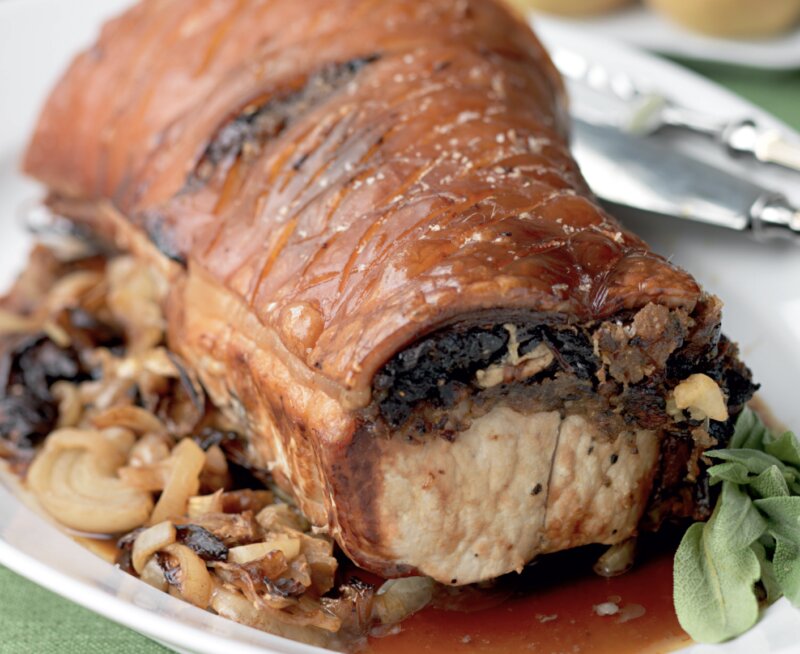
Roast Loin of pork with Prune & Apple Stuffing | 📸 Cristian Barnett
Info
- Serves
- 6 people
Tags
Ingredients
- 2 medium banana (long) shallots or
- 1 medium onion sliced
- 2kg boned loin of pork, rind scored thinly but deeply
- 1 tsp sea salt flakes, for the crackling
Prune & Apple Stuffing
- 15g butter
- 1 tbsp sunflower oil
- 2 medium banana shallots or
- 1 medium onion, thinly sliced
- 2 garlic cloves, finely chopped
- 1 large Bramley apple, peeled, cored and cut into small chunks
- finely grated zest of 1 unwaxed lemon
- 100g no-soak pitted prunes, quartered
- 1 tbsp clear honey
- 2 tsp dried sage or
- 2 tbsp finely shredded fresh sage leaves
- 50g fresh white breadcrumbs
- sea salt flakes
- freshly ground black pepper
Cider Gravy
- 2 tbsp plain flour
- 250ml dry cider 350ml vegetable cooking water
- 2 tbsp plain flour 250ml dry cider 350ml vegetable cooking water
- 6–8 fresh sage leaves, finely shredded (optional)
Method
To make the stuffing, melt the butter with the oil in a large non-stick frying pan. Cook the chopped shallots and garlic over a low heat for about 10 minutes until softened and beginning to brown, stirring occasionally. Add the apple to the pan along with the lemon zest and prunes. Cook over a fairly high heat for 3–4 minutes until the apples begin to soften, stirring regularly. Stir in the honey and sage. Toss together for a couple of minutes until hot, then remove from the heat and stir in the breadcrumbs and plenty of seasoning. If you are not cooking the pork immediately, allow the stuffing to cool completely before using.
Preheat the oven to 230°C/Gas 8. Place the sliced shallots, or onion, in a pile in the centre of a large, sturdy roasting tin – the heap should be about the same length as the pork. Put the pork on a board and pat the rind with kitchen paper to absorb any moisture. Cut off any string that may be holding it.
Cut between the eye of the meat and the rind, starting at the thin, rib end and working towards the centre. This is called ‘seaming back’ and you can ask your butcher to do it for you. Open out and spoon the stuffing evenly into the pocket made in the pork, leaving at least 2cm around the edge. Roll the meat up firmly, keeping the stuffing from bulging out of the pork. Cut about 5 pieces of kitchen string, 20cm long, and use them to tie the pork at even intervals – tie at each end and the middle first. Massage sea salt into the score marks made in the rind.
Place the pork on the bed of shallots and roast in the centre of the oven for 20 minutes. Turn the oven down to 190°C/Gas 5 and cook the pork for another hour. If any bits of the stuffing drop out onto the tray, try to scoop them up before they burn. They could make your gravy taste bitter. When the hour is up, take the pork out of the oven and transfer it to a baking tray. Turn the oven up to 230°C/Gas 8 and put the pork back in the oven for another 20 minutes, until the crackling is crisp.
If you like, add halved small apples to the tin for the last 20 minutes of the cooking time. Place them around the pork on the platter and serve in place of apple sauce. The little apples sold for kids’ lunch boxes are ideal. You’ll need half an apple per person.
To make the gravy, spoon off as much fat as possible from the original roasting tin, leaving all the softened shallots and flavoursome, sticky sediment. Throw away any burnt shallots. Place the tin on the hob, sprinkle over the flour and stir it into the pork juices. Pour over the cider and bring to the boil, stirring constantly. Cook for 2 minutes, then add the water and return to the boil. Leave to simmer for a few minutes, stirring occasionally, until all the sticky sediment.
Related content

Related TV Show

Related Shop Item